On Artistic Identity and the Cost of Exclusivity
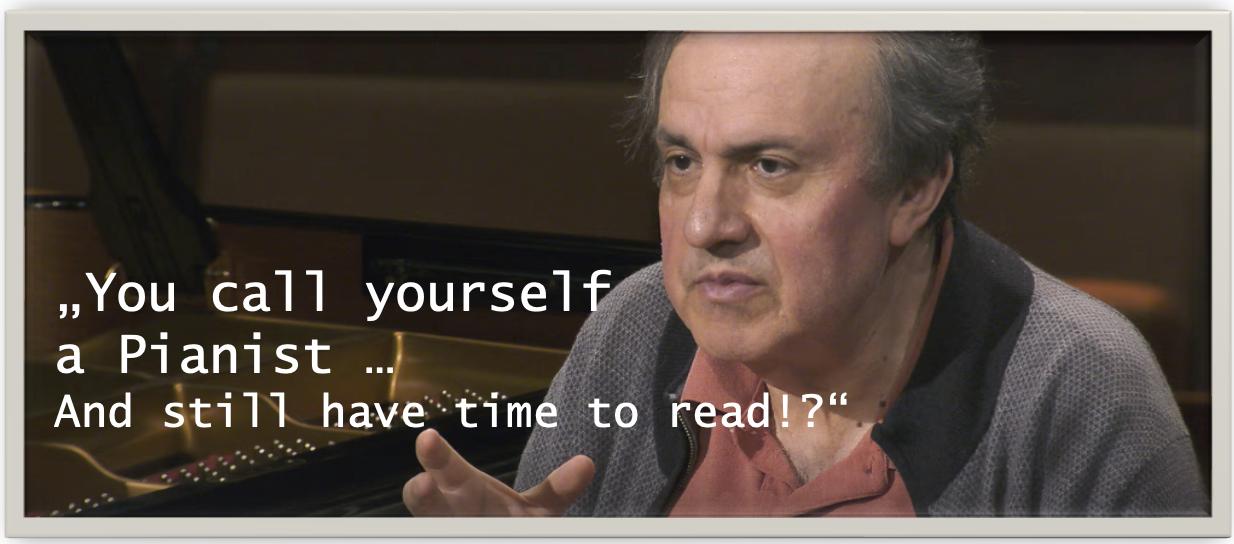
When I was 20 years old, I had the great privilege of turning pages for the pianist Yefim Bronfman.
During the break, I was backstage reading a novel. He came up to me, looked at the book, and said - in his unmistakable Russian accent:
“You call yourself a pianist… and still have time to read!?”
It was funny, of course. But it also carried something quite serious underneath it - an assumption that to be a musician, and especially a serious one, might require a kind of exclusivity. That music is not simply something you do, but something that gradually takes over who you are.
And in my work with musicians, I’ve come to see how often this is exactly what happens. Musicians don’t simply develop an identity as musicians; they come to inhabit it very early, very intensely, and often at the expense of other ways of being.
From a psychodynamic perspective, this is not surprising. Donald Winnicott described the self as something that emerges in relationship - through being seen, responded to, and recognized. When a child’s spontaneous impulses are consistently met, something like a “true self” can develop: a sense of being alive, real, and internally anchored.
But when that contact is partial - when the environment responds more to performance, to expectation, to what is needed rather than what is felt - a different structure can emerge. Winnicott called this the False Self: a self that is highly functional, often impressive, but organized around adaptation rather than authenticity.
If you place this dynamic within the context of high-level music education, it becomes very easy to see how the two can intertwine. The child discovers quite early: this is where I am recognized. This is where I am valued. This is where I exist in the eyes of others. And so the musical self grows, sometimes beautifully - but also sometimes disproportionately, leaving other aspects of the self underdeveloped or unarticulated.
Karen Horney describes another process that is highly relevant here: the formation of an idealized self-image. Not simply the wish to become good at something, but the internal construction of a figure who must be exceptional - a prodigy, a genius, someone who justifies their existence through excellence.
This image can be motivating. It can give direction, even meaning. But it also introduces an implicit condition: that one’s worth depends on maintaining this image. And that is where the structure becomes fragile. Because identity, in this form, is no longer something that supports the person - it becomes something the person has to continuously uphold.
In that situation, challenging moments that are in fact quite ordinary in a life - injury, rejection, loss of direction, even simple doubt - can become disproportionately destabilizing. The question that arises is no longer practical. It is not “What should I do next?” but something far more disorienting: Who am I, if this no longer holds?
If we take this seriously, then identity is not only an individual psychological matter. It is something that is shaped, quite decisively, by pedagogical environments. Which means that institutions play a role - not only in developing skill and excellence, but in shaping the conditions under which a self can either narrow or remain open.
The question, then, is not how to repair identity once it has become too rigid. It is how to prevent that rigidity from forming in the first place.
This may involve relatively simple but not always easy shifts: allowing for multiplicity rather than valuing and rewarding total identification; cultivating curiosity alongside discipline; and creating spaces in which a student is not only recognized for what they produce, but for who they are in a broader sense.
Because a sustainable artistic identity is not a narrow one. It has to be able to expand and contract. It has to survive challenges and changes. And it has to leave room for aspects of the self that are not immediately useful, productive, or legible within the field.
Which brings me back to that moment backstage.
The question is not whether one has time to read.
It is what happens if one does not.
What remains unformed, or even unimagined, if everything is organized around a single axis?
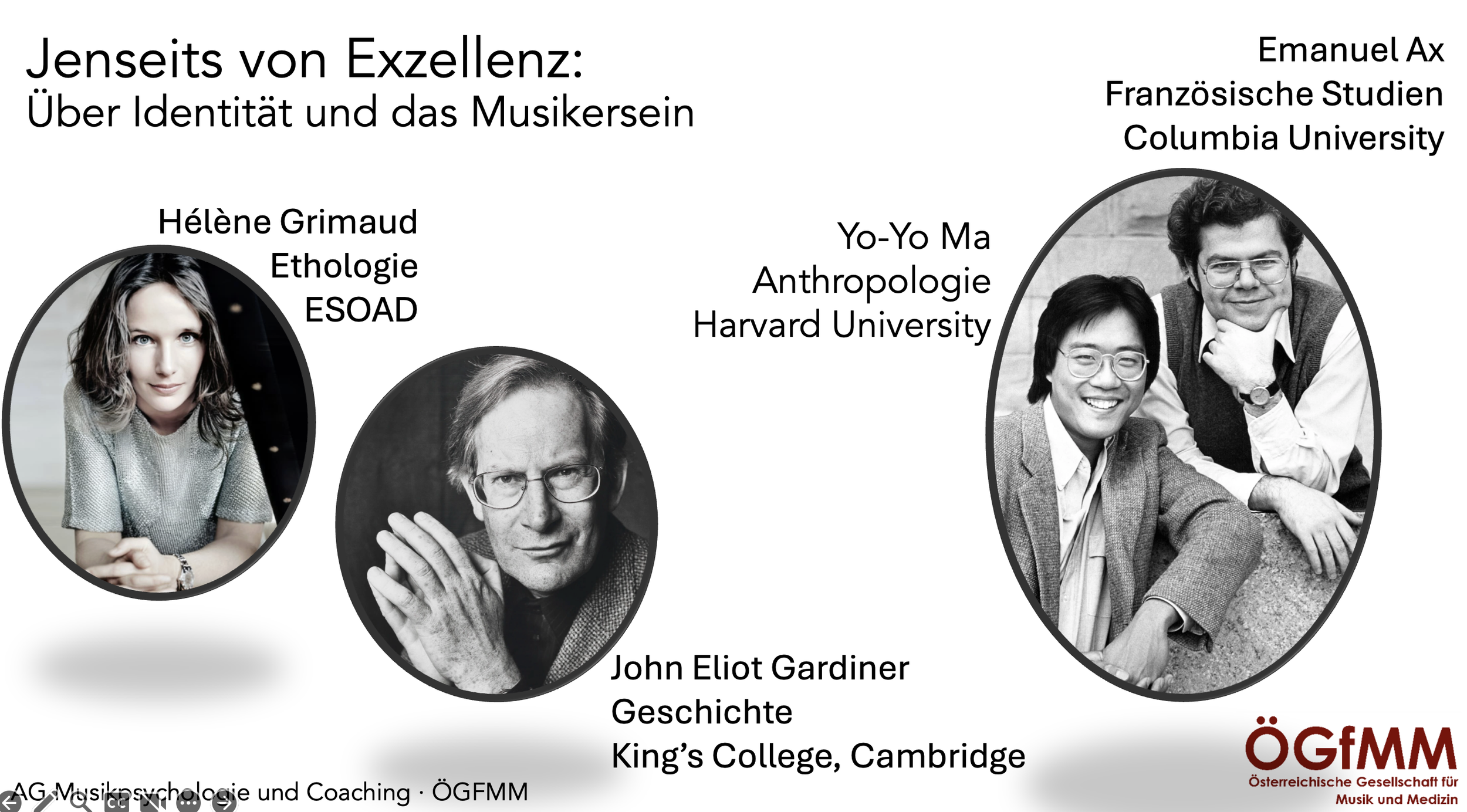
And perhaps this is why it is not entirely accidental that many of the artists we most admire did not build their identities exclusively within music: