
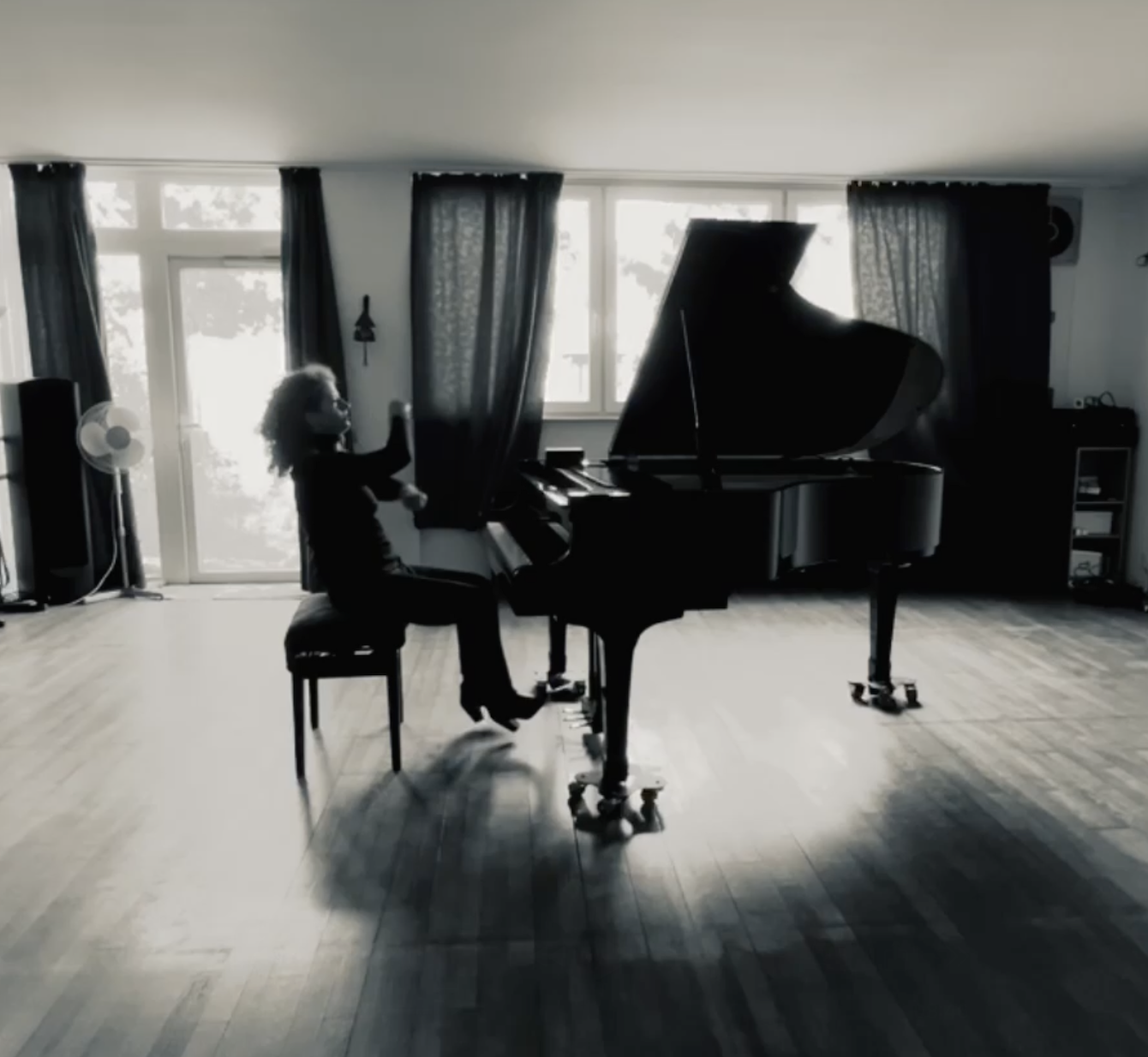
Upcoming Performances :
June 13, 18:45 – KULTurWERKstatt Urdenbach, Düsseldorf
July 4, 12:00 – Hamburger Bahnhof, Berlin
October 18, 19:00 - Bowerbird Concert Series, Trinity at 22nd, Philadelphia
October 22, 19:00 - Stretto Festival, New York
A History of Social Change:
Frederic Rzewski’s The People United Will Never Be Defeated! was premiered by Ursula Oppens at the Kennedy Center in Washington, D.C. on 7 February 1976, during the celebrations marking the bicentennial of American independence. The work is based on Sergio Ortega’s Chilean protest song El pueblo unido jamás será vencido — “The people united will never be defeated” — written in 1973 and associated with Salvador Allende’s Unidad Popular movement. After the military coup of 11 September 1973, the song travelled far beyond Chile and became an international anthem of resistance and solidarity. Rzewski transforms Ortega’s song into 36 variations arranged in six groups of six, moving through an extraordinary range of musical characters.
For this performance, I created a visual accompaniment. The music comes first: this is not a documentary with a soundtrack, but a musical performance accompanied by images. The film traces protest, repression, resistance, grief, creativity and collective action across different countries and generations. These histories are not equivalent; the images instead explore recurring human gestures of resistance and solidarity.
Notes:
“The People United Will Never Be Defeated!” by Frederic Rzewski
Heather O’Donnell, piano
Composed in 1975, this approximately one-hour work consists of 36 variations on the Chilean song El pueblo unido jamás será vencido (“The People United Will Never Be Defeated”), written by Sergio Ortega shortly before the 1973 military coup that overthrew the democratically elected government of Salvador Allende. The song became an international anthem of resistance against dictatorship and political oppression.
The cycle was commissioned in connection with the American Bicentennial and premiered on February 7, 1976, by pianist Ursula Oppens at the John F. Kennedy Center for the Performing Arts in Washington, D.C. O’Donnell’s performance takes place both in the fiftieth year since that premiere and on the occasion of the 250th anniversary of American independence.
Over the past five decades, Rzewski’s work has come to be regarded as one of the most significant politically engaged compositions in the piano repertoire. It combines the classical art of variation with elements of jazz, minimalism, folk traditions, improvisation, and extraordinary pianistic virtuosity.
“Rzewski’s work extends far beyond the specific political circumstances that inspired it,” says O’Donnell. “It is a profound exploration of struggle, doubt, solidarity, fragmentation, and renewal. Fifty years after its premiere, it continues to pose urgent questions about democracy, freedom, and the possibilities of collective action.”
Bevorstehende Auftritte:
13. Juni, 18:45 Uhr – KULTurWERKstatt Urdenbach, Düsseldorf (Bücherstr. 6, 40593 Düsseldorf)
Eintritt frei
Gefördert durch das Kulturamt der Landeshauptstadt Düsseldorf

4. Juli, 12 Uhr - Hamburger Bahnhof – Nationalgalerie der Gegenwart, Berlin (Invalidenstraße 50, 10557 Berlin)
Eintritt frei
“The People United Will Never Be Defeated!” von Frederic Rzewski
Heather O’Donnell, Klavier
Das 1975 entstandene, etwa einstündige Werk umfasst 36 Variationen über das chilenische Lied El pueblo unido jamás será vencido („Das vereinte Volk wird niemals besiegt werden“), das Sergio Ortega kurz vor dem Militärputsch gegen die demokratisch gewählte Regierung Salvador Allendes im Jahr 1973 komponierte. Das Lied wurde zu einer internationalen Hymne des Widerstands gegen Diktatur und politische Unterdrückung.
Der Zyklus wurde anlässlich des amerikanischen Bicentennials in Auftrag gegeben und am 7. Februar 1976 von der Pianistin Ursula Oppens im John F. Kennedy Center for the Performing Arts in Washington, D.C. uraufgeführt. O’Donnells Aufführung fällt sowohl in das fünfzigste Jahr nach dieser Uraufführung als auch auf den 250. Jahrestag der amerikanischen Unabhängigkeit.
Im Laufe der vergangenen fünf Jahrzehnte hat sich Rzewskis Werk zu einer der bedeutendsten politisch engagierten Kompositionen der Klavierliteratur entwickelt. Es verbindet klassische Variationskunst mit Elementen des Jazz, der Minimal Music, folkloristischen Einflüssen, Improvisation und höchster pianistisch-technischer Virtuosität. „Rzewskis Werk geht weit über den konkreten politischen Anlass seiner Entstehung hinaus“, sagt O’Donnell. „Es ist eine tiefgehende Auseinandersetzung mit Kampf, Zweifel, Solidarität, Zersplitterung und Erneuerung. Auch fünfzig Jahre nach seiner Uraufführung stellt es drängende Fragen nach Demokratie, Freiheit und den Möglichkeiten kollektiven Handelns.“